
Tennis Elbow (Lateral Epicondylitis) Fenestration Procedure
- Paul Williamson

- Oct 27, 2025
- 2 min read
Updated: Jan 19
Rehabilitation Guide
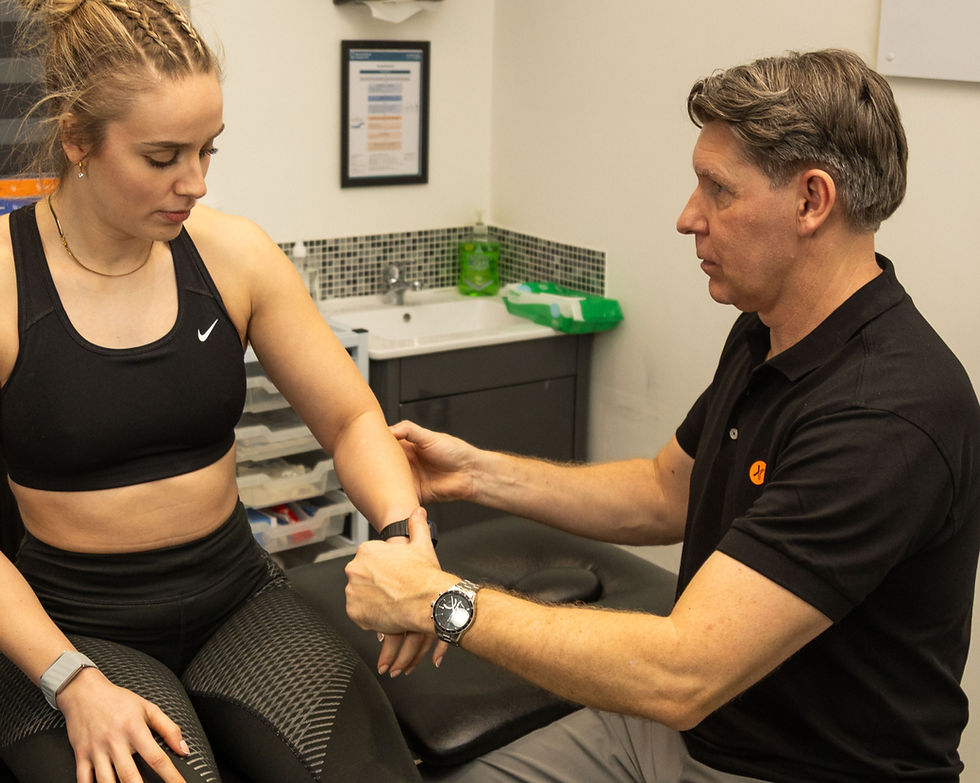
The tendon fenestration procedure is used to treat tennis elbow by creating small, controlled micro-channels in the irritated tendon to stimulate healing. This helps increase blood flow, break down unhealthy tissue, and encourage the tendon to repair itself more effectively. Rehabilitation is essential after the procedure to guide the tendon through a safe, progressive loading plan that supports recovery and helps prevent symptoms from returning.
Following your Fenestration procedure we have created a 12 week guide to help you return to normal function and sport. Please feel free to use this outline in consultation with your own coach or physiotherapist to help you safely return back to your best.
Rehabilitation Exercise Overview
Phase One - Recovery & Early Loading
In this phase, the aim is to settle irritation from the procedure, protect the healing tendon, and gently reintroduce light movements that encourage healthy tissue repair.
Phase Two - Controlled Strengthening
Here we begin structured, gradual strengthening to help the tendon adapt safely to load, improving its tolerance without causing flare-ups.
Phase Three - Heavy Slow Resistance
During this stage, we progressively increase resistance and slow, controlled loading to stimulate stronger tendon remodeling and build long-term resilience.
Phase Four - Functional & Sport Integration
The final phase focuses on restoring full arm function, re-training movement patterns, and preparing you to return to work tasks, hobbies, and sport-specific activities with confidence.
Outcome Measures
Strength Symmetry (Isometric Grip Strength)
Pain
Phase One - Recovery / Early Loading
In this phase, the aim is to settle irritation from the procedure, protect the healing tendon, and gently reintroduce light movements that encourage healthy tissue repair.
Weeks 1-4
Control pain
Protect tendon
Maintain mobility
Pain <3/10

Precautions: avoid repetitive gripping or resisted wrist extension, other than during rehabilitation exercises.
Phase Two - Controlled Strengthening
Here we begin structured, gradual strengthening to help the tendon adapt safely to load, improving its tolerance without causing flare-ups.
Weeks 5-7
Restore wrist extensor strength and tendon capacity
Progress to eccentrics as pain allows after week 6
Pain <2/10

Phase Three - Heavy Slow Resistance
During this stage, we progressively increase resistance and slow, controlled loading to stimulate stronger tendon remodeling and build long-term resilience.
Week 8-10
Increase tendon load tolerance
Add power / speed
Add neural mobility
Pain <2/10

Phase Four - Return to ADL's & Sport
The final phase focuses on restoring full arm function, re-training movement patterns, and preparing you to return to work tasks, hobbies, and sport-specific activities with confidence.
Week 10-12
Full load tolerance
Return to normal activity
Integration of sport activity as tolerated

Criteria for discharge:
Pain <2/10
Symmetrical grip strength (≥90% of contralateral side)
Functional performance restored


